Information
Landmark: Ben Youssef MadrasaCity: Marrakech
Country: Morocco
Continent: Africa
Ben Youssef Madrasa, Marrakech, Morocco, Africa
Overview
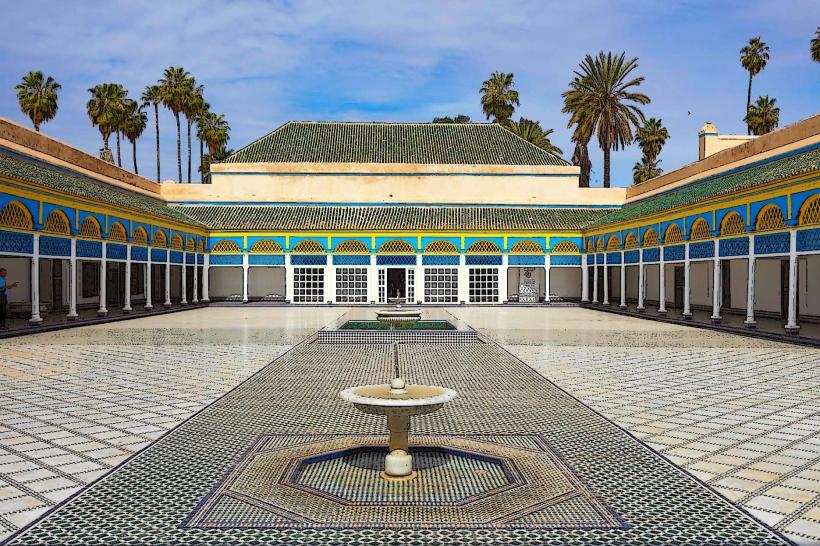
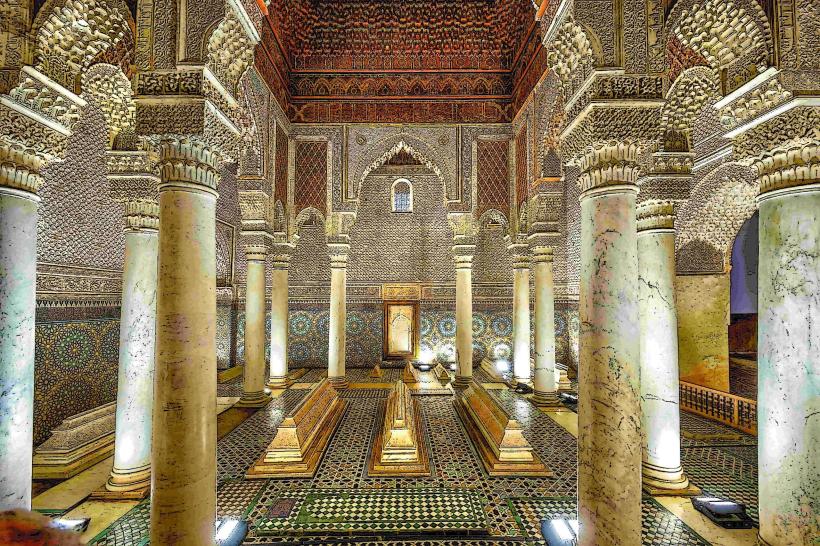
Honestly, Tucked deep in Marrakech’s bustling medina, Ben Youssef Madrasa stands as one of Morocco’s most stunning feats of Islamic architecture and a cornerstone of its history, meanwhile founded in the 14th century and expanded by the Saadian dynasty two hundred years later, it served as a hub of Quranic and theological study for more than four centuries, its stone courtyards echoing with the murmur of students reciting verses.Today, people marvel at its exquisite craftsmanship, where Islamic, Andalusi-Moroccan, and Berber artistry meet in intricate carvings that catch the light, equally important founded in the 14th century by the Marinid dynasty, it likely took shape under Sultan Abu al-Hasan, when stone walls first rose in the dusty light.Around 1564 or 1565, Sultan Abdallah al-Ghalib of the Saadian dynasty oversaw a major renovation and expansion, adding fresh stonework that still catches the afternoon sun, what’s more it takes its name from Sultan Ali ibn Yusuf, the 12th-century Almoravid ruler who championed learning and filled Marrakech with graceful arches and carved stone.It served as a madrasa, an Islamic college, where students pored over the Quran, mastered fiqh, explored grammar and logic, and at times tackled mathematics or charted the stars, besides at its height, Ben Youssef Madrasa packed more than 130 students into narrow dormitory cells-each barely wide enough for a bed-earning its locale as one of North Africa’s largest madrasas.It welcomed students from rural Morocco and far corners of the Islamic world, drawn to study at the nearby Ben Youssef Mosque, where the scent of antique cedar doors lingered in the air, after that it wasn’t just a school; it was a close-knit religious community where students lived together, prayed in the candlelit chapel, and studied with a deep, unwavering focus.The madrasa’s layout is a textbook example of Islamic courtyard design, built on symmetry, precise geometric balance, and a harmony you can feel as sunlight spills evenly across its stone floor, subsequently in the central courtyard, a broad marble basin catches the light, its cool surface once used for ritual washing.Ornate arcades curled around us, their horse-shoe arches casting soft shadows on the stone, also the walls glow with zellij-crisp, geometric tiles-beside carved stucco blooming with floral and Quranic designs, and cedarwood etched in kufic script and swirling arabesques.The prayer hall sits at the far end of the courtyard, its wooden doors catching the afternoon sun, what’s more it has a mihrab-a carved niche that points the way to Mecca.The ceiling blooms with intricate muqarnas, like delicate stone stalactites catching the light, consequently stripped to its essence yet humming with a quiet spiritual energy, it’s built to draw your mind toward the divine, in some ways The student dorms stretch across two floors, with rooms clustered around quiet courtyards and sunlit corridors, likewise barely more than two meters square, it felt stripped to the essentials-just enough space for a mat and the quiet weight of discipline.Just so you know, A few rooms have tiny windows that scan onto the inside courtyard, keeping them private and holding in the warmth, therefore quranic verses and poetic lines cover the walls, written in a blend of bold kufic strokes and flowing cursive Arabic.Muqarnas: intricate, stalactite-like carvings that crown doorways or tuck into the shadowed curves of prayer niches, what’s more geometry and symmetry come alive here-each line, every tile, even the smallest carved detail falls into a precise, balanced pattern, echoing Islamic architecture’s vision of unity and divine order.As you can see, The structure shows how deeply the Saadian dynasty valued religious learning and the splendor of art, with every carved arch echoing their devotion, not only that silent and contemplative, the setting still carries a calm, almost sacred air, even though its days as a religious school are long gone.Narrow staircases, snug dorm rooms, and hushed alcoves feel close and sheltered, a sharp contrast to the dazzling, open stretch of the main courtyard, along with light and shadow shift as sunlight slips through lattice windows and arcs beneath the colonnades, casting patterns that seem to breathe with the passing hours.It’s no towering palace; it’s modest in aim, yet finished with a precision that gleams like polished wood, as a result the madrasa closed its doors in 1960, then, decades later, craftsmen brought its faded walls back to life.Frankly, Today, it serves as both a museum and a historic site, attracting architecture lovers, curious historians, and travelers eager to explore Islamic culture, from intricate tilework to soaring arches, at the same time in 2022, it opened its doors again after years of careful restoration, which safeguarded the building’s frame and its delicate carvings.Compared with other madrasas-Ben Youssef in Marrakech with its 16th‑century Saadian ornament and bustling student life, Bou Inania in Fes with its towering minaret and grand mosque, the jewel‑like Attarine of the 14th‑century Marinids, or Meknes’ simpler 18th‑century Al‑Attarine-the Ben Youssef stands out as more than a locale of study; it embodies Islamic philosophy, weaving knowledge, discipline, and beauty into every carved arch and quiet courtyard, moreover the building stands as a testament to intellectual devotion, a setting where young men gathered to memorize scripture and shape lives of moral and spiritual grace, their voices echoing softly through its quiet halls.In the end, the Ben Youssef Madrasa stands as a true gem of Islamic architecture in Morocco, where plain stone walls meet carved cedar and shimmering tile, blending purpose with beauty, simultaneously once home to generations of scholars, it still stands as a symbol of spiritual insight and cultural grace, its classical stone walls carrying the quiet echo of centuries.As you wander its halls, you enter a spot where learning and art feel sacred, and the divine reveals itself in perfect symmetry, hushed stillness, and the careful touch of a craftsman’s hand.
Author: Tourist Landmarks
Date: 2025-09-26